
Hair oils wholesale for retailers: assortment, formats, and replenishment
A B2B hair oils collection organized for retailers and resellers who need practical selection signals for repeatable bulk buying.
Products
229 results · Page 3 of 4
0 products shown
No products match these filters.
Your next hair oils wholesale order should not start with a long, vague list. It should start with intent: what your store sells, how often you reorder, and which references move fastest in your area.
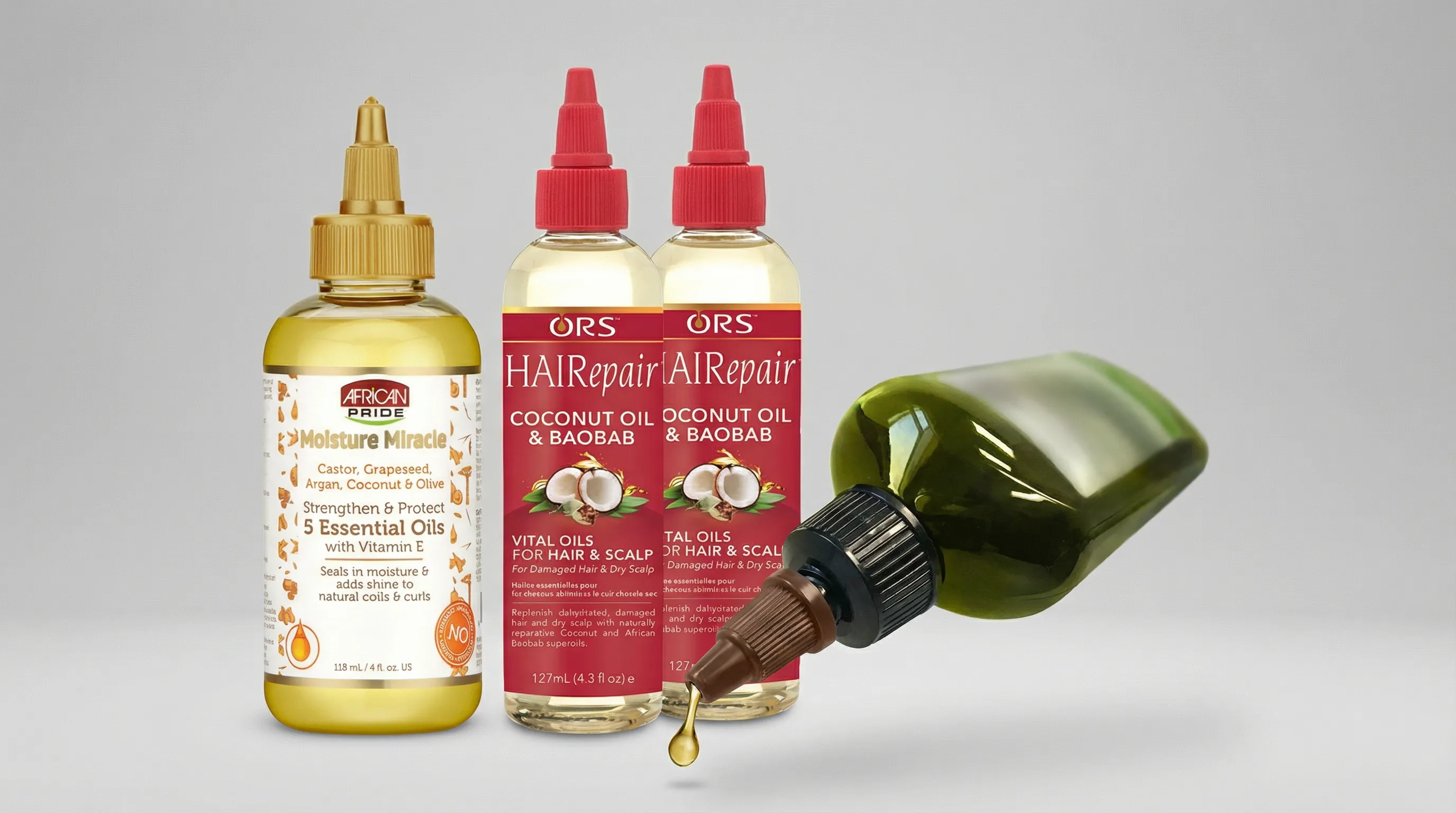
This page groups hair oils by practical signals that matter in distribution: format, variant type, and current availability. You can review references from brands like African Pride, DIFEEL, ORS, ROOTSGRO, DESIGN ESSENTIALS, and FANTASIA in one place before deciding which mix supports your margin and shelf plan.
If you sell across multiple locations, use this as a pre-check room and then move into broader category browsing at Hair oils category before you commit to any B2B order.
What does Hair oils wholesale for retailers: assortment, formats, and replenishment include?
Hair oils wholesale for retailers: assortment, formats, and replenishment includes the active products shown in this catalog for retailers and resellers. Use the brand and availability filters to focus the assortment before opening a product.
How do retailers place a wholesale order?
Retailers order products from Hair oils wholesale for retailers: assortment, formats, and replenishment by opening a PDP, choosing the physical variant and following the available purchase or request path. Read the B2B ordering guide for distributors.
Which MOQ and buying Program applies?
The MOQ, case pack and Program for Hair oils wholesale for retailers: assortment, formats, and replenishment come from the current Offer rather than the collection name. Compare buying Programs .
How are fulfilment and shipping confirmed?
Fulfilment and shipping for Hair oils wholesale for retailers: assortment, formats, and replenishment are confirmed from the active product and buying terms. Use current availability instead of historical inventory or supplier notes.
What this hair oils wholesale collection is built for
You are not browsing for a single consumer purchase. You are browsing as a retailer, distributor, or salon buyer who needs replenishable references. A practical hair oils wholesale decision starts by separating what can rotate in your store from what is only interesting in a catalog browser. That means focusing on how an item is used, what size it comes in, and whether stock is currently visible at reference level.
This collection currently includes line-level signals that let you build intent quickly. African Pride Moisture Miracle and DIFEEL Sweet Almond and Batana formats help you test hydration demand without overloading the shelf. ORS Hairepair and ROOTSGRO references sit in the same intent lane for buyers that need damage-recovery messaging and restorative bundles. DESIGN ESSENTIALS and DIFEEL scalp-scape variants give a direct path to support and issue-based merchandising, while the Fantasia olive serum supports compact, shorter-turn picks. As a result, this is a buying grid for operations, not a mood board.
Start with outcomes, then map to specific hair oil families
For most U.S. wholesale accounts, the first filter should be outcome by client profile: moisture, scalp care, and growth-oriented routines. You can pair one family for repeat demand and one family for cross-sell without bloating stock depth. For instance, small-format DIFEEL options like the 2.5 oz almond and tea tree references can help you test acceptance in newer outlets, while 8 oz Jamaican Black Castor positions a repeatable volume anchor in your stronger lanes.
Use these family clusters to avoid SKU sprawl:
- Moisture and slip support: options similar to the African Pride and FANTASIA presentations.
- Scalp-focused support: DIFEEL peppermint and tea tree variants.
- Repair and scalp recovery narratives: ORS Hairepair and ROOTSGRO-style formulations.
- Long-cycle repeaters: larger-capacity DIFEEL and castor-based references.
If your sales team uses a simple buy template, assign each cluster to one buyer owner. That is how a hair oils supplier can keep the assortment readable and still give customers what they expect by channel. Every extra SKU without a role becomes a drag on counting, restocking, and shelf resets. Better is a short, role-based matrix.
Use pack size and format to control case planning
Pack size is usually the first thing people underestimate in hair oils distributor planning. In a wholesale context, the 2.5 oz, 4 oz, 4.3 oz, and 8 oz references are not just packaging differences; they are demand controls. A 2.5 oz reference can de-risk new location launches because minimum exposure is lower. A 4.3 oz or 8 oz format tends to suit stable sellers that need fewer transaction cycles.
Since this is hair oils in stock mode, the right sequence is to map each reference by format first, then by expected sell-through. Then compare that against your replenishment cadence. A 2.5 oz Batana in a boutique may be enough to test acceptance before placing a repeat, while the same location might need larger 8 oz growth line references if hair services and local demand are stable. This is how you keep case planning from becoming guesswork.
The second layer is MOQ discipline. Even without fixed numeric claims in-page, you should still evaluate whether a reference has a viable ordering floor for your order size and frequency. If a small format needs frequent replenishment, it may still be worth including if it keeps service consistency and reduces loss from stockouts. If it does not turn, move it down the assortment ladder and let a higher-use reference carry that slot.
Treat stock and variant data as your core decision source
Because the catalog is configured for live inventory status, your first operational control is to trust the reference-level stock view, not a static promise from description text. In practical terms, check the in-stock status before you build your final basket. If a line appears active by reference, it is an operational starting point. If not, move it to a secondary list.
Do not rely on title-level interpretation alone. Confirming variant-level details is where B2B buyers avoid costly mismatch:
- Match each reference to the exact SKU variant for format and quantity.
- Review whether it is a 2.5 oz, 4 oz, 4.3 oz, or 8 oz presentation before counting units.
- Verify what the seller marks for replenishment-sensitive references in each variant family.
- Build a two-column planner: immediate-need SKUs and refill-ready SKUs.
- Keep a separate note for references that may need recheck before next ordering window.
If you are comparing against seasonal demand, use this same loop every cycle. The best indicator of operational stability is not just “available,” but “available in the right variant.” That distinction protects margins when your assortment includes both compact and bulk needs.
For stronger execution, pair these checks with your own category context. The Hair oils buying guide can be useful for internal training of new staff who still confuse format choice with product choice, and it creates a repeatable workflow for new hires.
Build your first hair oils bulk mix with a distributor logic
Start with a constrained list of references and never begin with a full catalog dump. A good first-round mix might include one hydration leader, one scalp support item, and one growth-oriented line in each of your strongest pack sizes. Then set a replenishment rule: if a line sells through cleanly, expand it; if not, replace instead of adding.
Because this is for buyers who need speed, the final page step is simple: define a working basket using the collection grid, then move to authentication and account-level pricing flows for full commercial confirmation. If you run a multi-location business, use separate baskets by outlet profile. A salon-led location and a high-turn convenience location should not carry identical pack counts.
You do not need to become rigid with this collection. You need repeatability. The right move is to treat every new reference as part of a pilot, not a permanent addition. If it earns shelf velocity and stays in stock where you planned it, then promote it up the ladder. If not, de-list it cleanly and free your working capital.
Use category context as your control point when in doubt: Explore the Hair Oils category before expanding into larger rounds.
Frequently Asked Questions
What hair oil formats are available in this hair oils wholesale group?
The current collection includes multiple size families, including 2.5 oz, 4 oz, 4.3 oz, and 8 oz references across core brands. Use size filters first so you can align buying volume with your outlet-level demand and shelf capacity.
How is MOQ handled when buying as a hair oils distributor?
MOQ can vary by reference and supplier conditions, so there is no single universal minimum for the whole collection. Review each product reference before you submit and confirm final minimums during the B2B quote or order confirmation step.
How do I verify availability for a replenishment order in advance?
Check the live reference-level stock status first, then open each PDP to verify the exact variant. That is the practical way to avoid selecting an unavailable size or format just because another size from the same product is in stock.
Can I mix different formats and brands in one hair oils bulk order?
Yes. Mixed-format orders are common for this type of assortment work. Keep the list organized by function and pack size so your team can rebalance quantity by channel performance without rebuilding the whole order structure.
Ready to buy this collection at wholesale terms?
Unlock pricing and build my first hair oils orderBefore finalizing, open each chosen PDP and validate MOQ, pack format, and availability before you open a distributor order. Then confirm the route with your team notes so future replenishment decisions are consistent.
For operational support, contact WhatsApp or Phone before placing your first multi-SKU batch if you want to avoid packaging and condition mismatches.