
Wholesale Hair Products Vendors for Salons, Barbershops, and Retail Resellers
Source wholesale-ready hair care SKUs, review pack formats and stock signals, and build repeatable assortments for salons, barbershops, and beauty supply channels.
Products
761 results · Page 9 of 13
0 products shown
No products match these filters.
Retailers and resellers looking for wholesale hair products vendors need fast commercial clarity, not generic catalog copy. This collection is built around practical buying decisions so you can compare products by type, brand, and sales presentation before committing to a cart.
You will find hair care options across leave-in moisture support, styling and hold products, and wash-focused SKUs, with volume-oriented pack structures depending on each item. The page is organized to help salons, barbershops, and beauty supply buyers sort options by business need.
Use the listing and each product page to review availability signals and SKU-level commercial details, then move qualified items into your business account flow for ordering and ongoing replenishment management.
What does Wholesale Hair Products Vendors for Salons, Barbershops, and Retail Resellers include?
Wholesale Hair Products Vendors for Salons, Barbershops, and Retail Resellers includes the active products shown in this catalog for retailers and resellers. Use the brand and availability filters to focus the assortment before opening a product.
How do retailers place a wholesale order?
Retailers order products from Wholesale Hair Products Vendors for Salons, Barbershops, and Retail Resellers by opening a PDP, choosing the physical variant and following the available purchase or request path. Read the B2B ordering guide for distributors.
Which MOQ and buying Program applies?
The MOQ, case pack and Program for Wholesale Hair Products Vendors for Salons, Barbershops, and Retail Resellers come from the current Offer rather than the collection name. Compare buying Programs .
How are fulfilment and shipping confirmed?
Fulfilment and shipping for Wholesale Hair Products Vendors for Salons, Barbershops, and Retail Resellers are confirmed from the active product and buying terms. Use current availability instead of historical inventory or supplier notes.
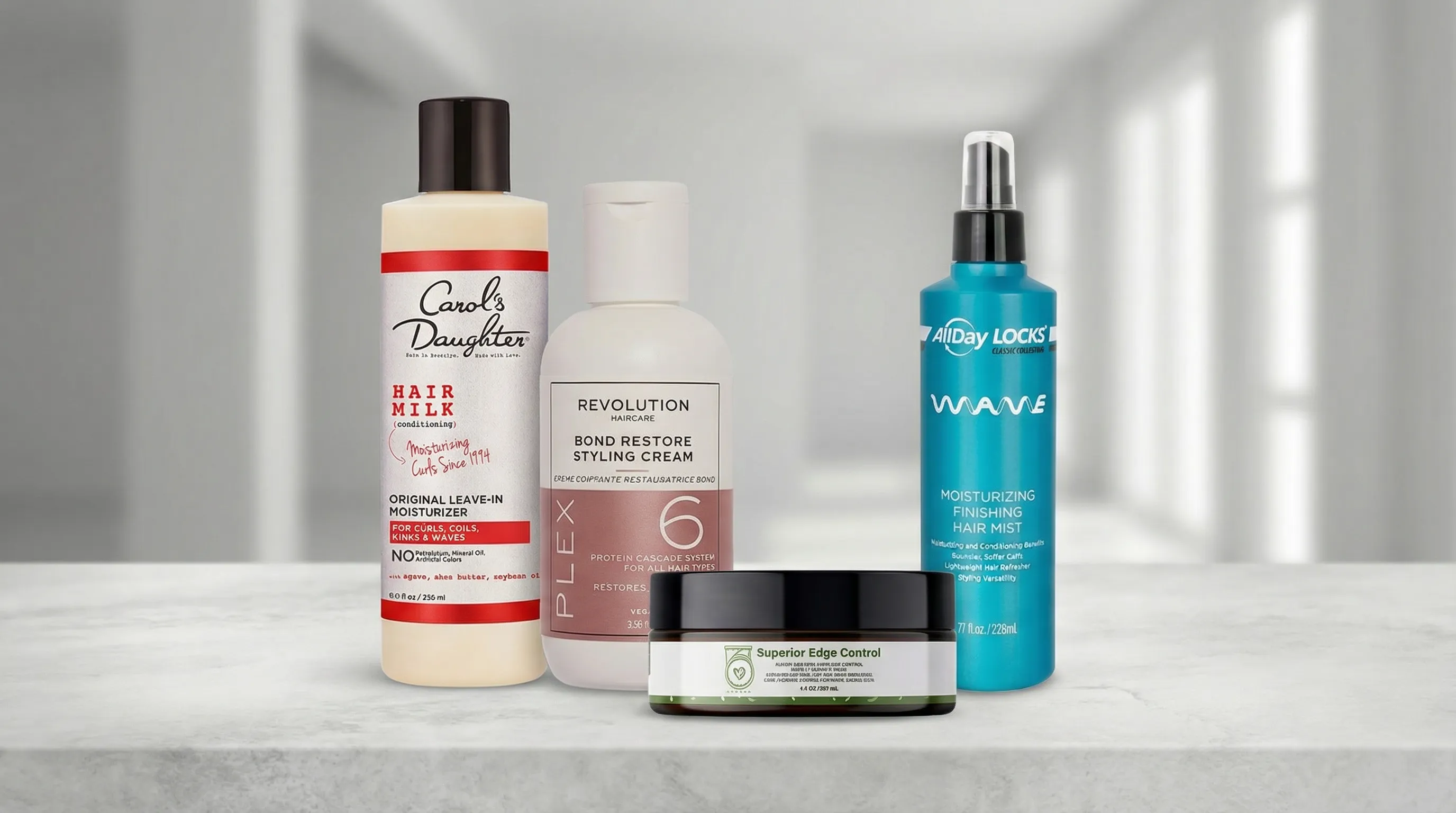
Assortment base by format: Carol's Daughter leave-ins, Revolution Plex Step 6 cream, Ole Capilar Onion & Ginger shampoo, and Pureo edge control
Buyers comparing wholesale hair products vendors can make cleaner decisions when they start with function, not brand logos. In this catalog, you can map core needs to clear product formats: leave-in moisture support, anti-frizz styling cream, scalp-oil control shampoo, and edge or wax hold products. That gives your team a balanced shelf plan before going deeper into brand preference.
Current examples help clarify the mix. Carol's Daughter Hair Milk leave-in moisturizer and a Carol's Daughter Goddess Strength mini set support moisture and trial-size needs. Revolution Haircare Plex Step 6 appears as a six-unit styling cream pack for frizz and bond-care positioning. Ole Capilar Onion and Ginger Oil Control shampoo appears in a five-unit wholesale pack, while Pureo edge control and Guilin men's aqua wax support hold-focused shoppers. TIGI Bed Head After Party and AllDay Locks curl-focused formats add options for smoothing and curl definition.
If your team is reviewing hair products vendors wholesale offers, treat these formats as distinct demand lanes on the shelf. A lane-based setup makes reordering easier: moisture lane, styling and finish lane, wash and scalp lane, and hold lane. Buyers can then compare depth within each lane by brand, format, and pack condition instead of making one-off picks.
Pack and condition planning: 5-pack, 6-pack, and 24-unit wax listings for core vs tactical buys
A hair products vendors distributor decision is often won or lost at the pack level. Some SKUs are packaged for repeat turns, while others are better treated as tactical opportunities. In this collection, you can see examples of different unit structures, including six-pack and five-pack formats, plus larger case-style options such as a 24-unit wax listing. The practical step is to assign each SKU to either core reorder or opportunity buy before adding quantities.
Condition detail matters as much as unit count. One listed wax item includes a liquidation note with packaging peel context and a stated expiration month in the product evidence. That type of note can fit promo bins, clearance walls, or short-cycle channel tests. It may be less suitable for premium front-shelf placement where packaging consistency drives conversion. Use listing and PDP details to decide which store doors should carry that inventory.
When buyers think like a hair products vendors supplier, the goal is not maximum volume on day one. The goal is controlled velocity by SKU. Volume options are available by SKU terms, but pack structure should match real movement in each account type. This reduces dead stock risk and keeps cash available for faster movers.
In-stock validation workflow: shortlist in collection, confirm pack details on each PDP, then route to Hair Tools & Grooming if needed
For teams filtering hair products vendors in stock, speed comes from checking availability at two layers: collection view first, product detail page second. The collection helps you screen a broad set quickly. The product page helps you confirm pack format and commercial details before final decisions. Running this two-step check before every purchase order keeps your cart tied to what is currently actionable.
A practical workflow is to shortlist by function, then open product pages for your final 10 to 20 candidates. Confirm whether each line is sold as unit, pack, or case where that data is shown, and confirm current availability signals before you commit quantities. This approach works for both single-store buyers and multi-location teams that need predictable replenishment.
If you need to expand beyond core hair care into adjacent upsell items, route buyers to Hair Tools & Grooming. If your team wants merchandising context before ordering, review current retail trend notes and align picks to your local shopper profile.
Channel mix by usage profile: salon treatment carts, barbershop hold products, and beauty supply routine bundles
The same SKU set rarely works across all channels. Salons often need treatment and finish products that support service outcomes and take-home add-ons. Barbershops usually prioritize hold, control, and fast-turn styling formats with straightforward purchase decisions at checkout. Beauty supply counters need a broader mix across moisture, styling, and maintenance to cover different shopper routines in one visit.
Use catalog cues to build channel-specific bundles. A salon-focused cart might combine leave-in and bond-support styling products, then add smoothing or anti-frizz finishers. A barber-oriented cart can center on wax and edge-control families with backup options by brand. A retail beauty store can split shelf space across curl activators, hair mist, shampoo control products, and best-selling styling creams to cover routine plus impulse use cases.
Regional resellers can use a two-tier plan: dependable weekly movers plus controlled test SKUs tagged as sale, trending, or clearance when appropriate to their customer base. This structure supports repeat ordering without overloading the first buy. It also gives your team a clean way to compare hair products vendors bulk opportunities while keeping replenishment logic intact.
Reorder control checklist: account setup, SKU-level format checks, and clearance-condition routing
Treat this as a working checklist before submitting any wholesale cart. It reduces decision fatigue and keeps team members aligned across locations.
- Confirm your business account flow first so pricing and ordering tools are available for your team.
- Build an initial candidate list by product function (moisture, wash, styling, hold), then narrow by brand preference.
- Open each candidate PDP and confirm sales format details when shown (unit, pack, or case).
- Re-check availability signals in listing or PDP right before final quantity entry.
- Review item notes for special conditions (for example, clearance context or packaging notes) and route those SKUs to the right channel.
- Tag 20 to 30% of the cart as test inventory and 70 to 80% as reorder-focused staples for better control on the next cycle.
Retailers who treat wholesale hair products vendors as a repeat operating system, not a one-time buy, can keep reorder decisions more organized month after month. The collection is built to support that process with category exploration, SKU-level commercial detail, and account-based ordering flow.
Frequently Asked Questions
How do I choose between 5-pack, 6-pack, and larger case options?
Start with weekly unit movement by store. Smaller packs are typically easier for first tests, while larger cases fit proven movers. Check each PDP for sales format and any item-specific condition notes before setting final quantities.
What is the fastest way to compare products across categories before ordering?
Build your shortlist by function first: moisture and leave-in, wash and scalp, styling and finish, and hold and control. Then compare brand and presentation inside each lane so your team can swap SKUs without rebuilding the entire cart.
Where should I confirm current availability before I submit a wholesale cart?
Use the collection page to scan availability signals quickly, then open each product page to confirm details for your final picks. If you need adjacent add-ons, move into Hair Tools & Grooming and keep the same review process.
Is this collection only for salons, or can other business types buy here too?
It is structured for multiple professional buyer types, including salons, barbershops, beauty supply retailers, and reseller teams. The purchase flow is account-based so you can manage selection and ordering as a recurring wholesale process.
Ready to buy this collection at wholesale terms?
Unlock Wholesale Hair Inventory and Build Your Next Reorder CartUse Badge Sales to review price-sensitive opportunity SKUs and Badge Trending to spot lines with current buyer momentum before finalizing your assortment split.